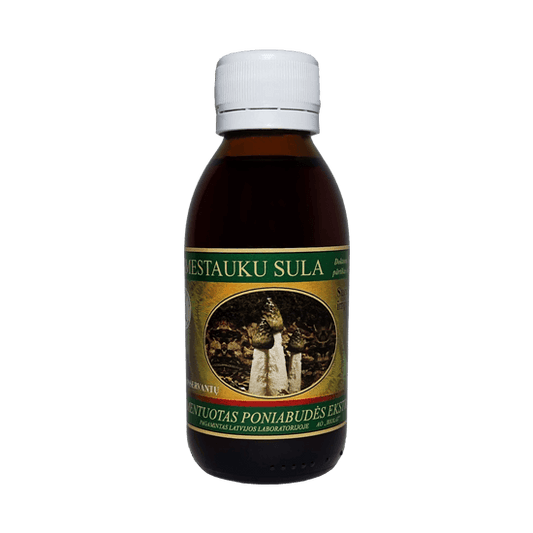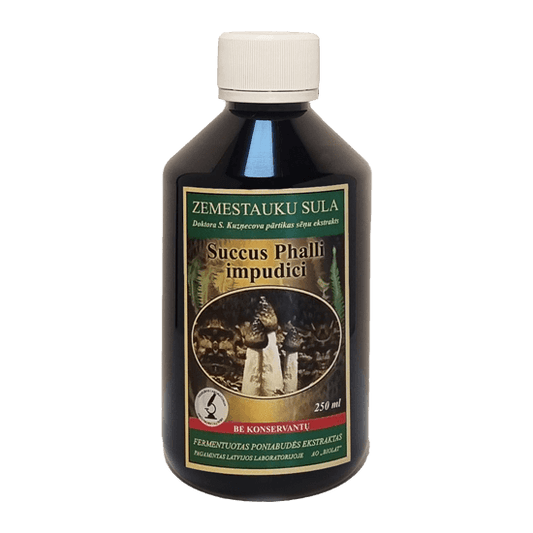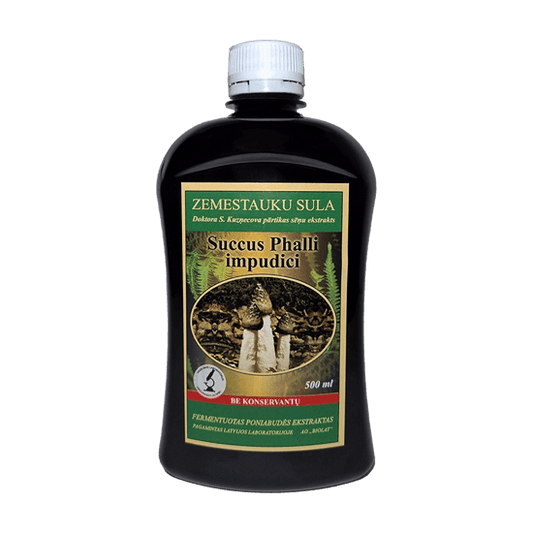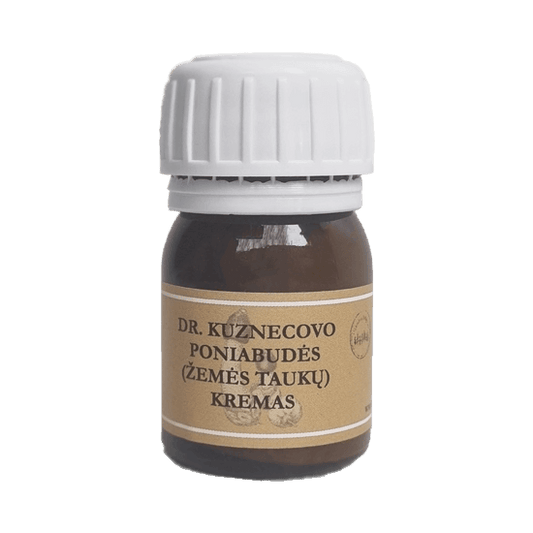

What is Stinkhorn?
The Common Stinkhorn (Phallus impudicus) – known in Lithuanian folklore as Poniabudė or Žemės taukai (Earth Fat) – is a fascinating fungus belonging to the genus Phallus. It is a unique organism that has been utilized in various cultures since ancient times for its potential health benefits. Today, stinkhorn extracts are increasingly found in high-quality dietary supplements and natural cosmetics. This fungus is widespread across Europe, North America, and parts of Asia, including China, India, and Taiwan. it is most commonly found in deciduous forests from July to September.
Despite its strong odor when mature, the stinkhorn is non-toxic. In its young stage—known as the "witch's egg"—the inner layers can even be eaten raw, offering a radish-like flavor and a crisp texture. While it is considered a delicacy in France, sold fresh or pickled, historical records in Germany also mention its use in traditional recipes.
Historical Context
According to historical sources, in Lithuania, this fungus was traditionally eaten raw with sour cream, seasoned with salt and pepper. For winter use, it was often prepared as tinctures or infusions with vodka or wine, or simply dried. In medieval Germany, the stinkhorn was a recognized remedy for gout, while in northern Montenegro, a solution made from the fungus was rubbed onto bulls before fights to increase their strength and endurance.
Composition and Effects of Stinkhorn Extract
Stinkhorn extract is rich in various biologically active substances, most notably polysaccharides, flavonoids, and phytosterols. These compounds are responsible for the extract’s functional properties:
- Polysaccharides: These complex carbohydrates are considered the primary active ingredients in the stinkhorn. They are well-regarded for their ability to support the immune system and boost overall vitality.
- Flavonoids: These powerful antioxidants help protect cells from oxidative stress, reduce inflammation, and may have a positive impact on cardiovascular health.
- Phytosterols: These plant-derived compounds are structurally similar to hormones. In natural medicine, the extract is often used to support hormonal balance and help alleviate symptoms associated with menopause.
Potential Health Benefits of Stinkhorn Extract
- Bone Health: Some studies suggest that the compounds in stinkhorn extract may help support bone mineral density and contribute to reducing the risk of osteoporosis.
- Energy and Endurance: In traditional applications, the stinkhorn has been used to reduce fatigue and increase physical energy. It is especially valued during recovery or after periods of high physical exertion.
- Sexual Vitality: One of the most famous traditional uses of stinkhorn extract is the support of male vitality. It has been used for centuries to promote healthy blood circulation and support libido.
- Skin Health: Due to its antioxidant properties, the extract can be beneficial for skin health by protecting against free radical damage, improving elasticity, and reducing the appearance of fine lines.
Usage
Recommended Intake: Mix 5–10 ml (1–2 teaspoons) into 0.5 glass of warm water. Take before a meal or approximately 1 hour after a meal.
Storage: Shake well before use. Store in the refrigerator after opening.
Note: Do not exceed the recommended daily dose. This article is for informational purposes only and should not be considered medical advice.